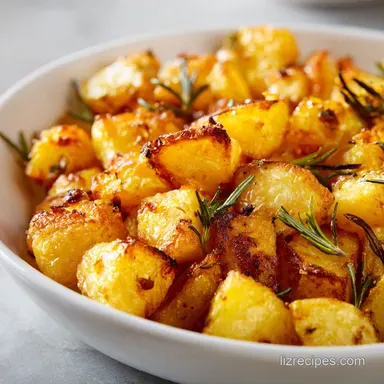
Best Crispy Ovenroasted Potatoes: Mahogany Crust
- Time:15 minutes prep + 60 minutes cook = 75 minutes total
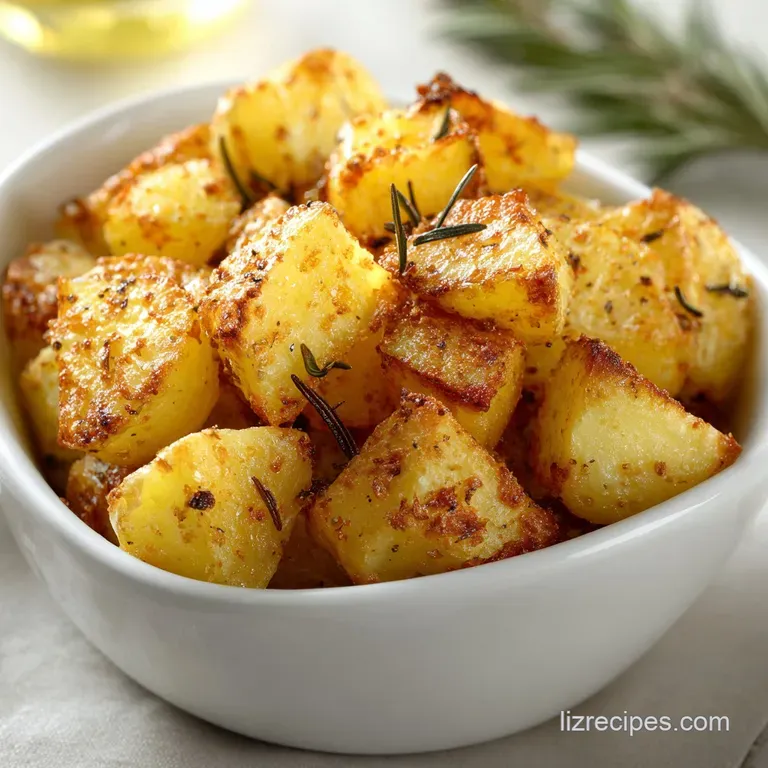
- Flavor/Texture Hook: Mahogany crust with a velvety interior
- Perfect for: budget-friendly Sunday roasts or a crowd-pleasing side
- Secrets for the Best Crispy Ovenroasted Potatoes
- The Magic Behind the Crunch
- Cook Method Comparison
- Component Breakdown for Maximum Crisp
- The Essentials and Easy Swaps
- Path to Golden Perfection
- Fixing Common Texture Issues
- Troubleshooting Common Issues
- Adjusting the Batch Size
- Busting Common Potato Myths
- Storage and Zero Waste
- Vibrant Pairing Ideas
- Recipe FAQs
- 📝 Recipe Card
Secrets for the Best Crispy Ovenroasted Potatoes
The sound is what gets me every time, that distinct scritch scratch of a fork hitting a potato crust that's actually hard. I remember the first time I tried the baking soda trick, and I honestly thought I was ruining the potatoes. They looked like a mashed up mess in the pot, almost fuzzy.
I almost dumped them out, but I pushed through, and the result was a crust that didn't just crunch, it shattered.
The real hero here is the Russet potato. I've tried using red potatoes or baby golds, but they just don't have the same soul for this dish. Russets are high starch and low moisture, which is exactly what you need when you want a potato that acts like a sponge for hot oil.
If you use a waxy potato, you get a nice roast, but you'll never get that deep, mahogany shell that defines the best crispy ovenroasted potatoes.
You can expect a side dish that balances the salty, herbaceous punch of rosemary and garlic with a center that feels almost like a baked potato. It's a contrast of textures that makes the whole meal feel more complete.
Right then, let's get into how we actually make this happen without turning your kitchen into a grease pit.
The Magic Behind the Crunch
You don't need a culinary degree to get this right, but knowing why we do these weird steps helps you avoid mistakes. It's all about manipulating the starch.
Pectin Breakdown: Baking soda raises the pH of the water, which breaks down the pectin in the potato's cell walls. This creates a starchy "slurry" on the surface of each chunk.
Surface Area Expansion: Shaking the potatoes in a pot creates thousands of tiny jagged edges. More edges mean more surface area for the oil to grab onto and crisp up.
Thermal Shock: Dropping room temperature potatoes into shimmering hot oil creates an immediate sear. This locks in the interior moisture while the outside fries instantly.
Steam Evaporation: Letting the potatoes steam dry after draining removes excess surface water. Water is the enemy of crispiness, as it creates steam that softens the crust.
Cook Method Comparison
| Method | Time | Texture | Best For |
|---|---|---|---|
| Oven Roast | 75 min | Thick, shattering crust | Large batches, Sunday dinner |
| Stovetop Fry | 30 min | Thin, oily crisp | Small portions, quick sides |
| Air Fryer | 25 min | Even, dry crunch | Single servings, reheating |
Component Breakdown for Maximum Crisp
| Ingredient | Science Role | Pro Secret |
|---|---|---|
| Russet Potato | High starch base | Peel deeply to remove all green skin |
| Baking Soda | Pectin softener | Don't over boil or they'll dissolve |
| Vegetable Oil | Heat conductor | Heat the pan first for an instant sear |
| Kosher Salt | Moisture draw | Salt the water heavily to season the core |
The Essentials and Easy Swaps
For the potatoes: - 2 lbs russet potatoes, peeled and cut into 2 inch chunks Why this? High starch content creates the best crust - 1 tsp baking soda Why this? Breaks down surface pectin for "fuzziness" - 1 tbsp kosher salt Why this? Seasons the inside of the potato
For the roasting fat: - 1/3 cup vegetable oil Why this? Neutral flavor and high smoke point
For the seasoning: - 1 tsp garlic powder Why this? Doesn't burn as fast as fresh garlic - 1 tsp dried rosemary Why this? Infuses oil with woody aroma - 1/2 tsp black pepper Why this? Adds a subtle, sharp bite - 1 tsp flaky
Sea salt Why this? Provides a final, crunchy salt burst
| Original Ingredient | Substitute | Why It Works |
|---|---|---|
| Russet Potatoes | Yukon Gold | Creamier interior. Note: Less crunch than Russets |
| Vegetable Oil | Avocado Oil | Very high smoke point. Note: Slightly more expensive |
| Dried Rosemary | Dried Thyme | Similar earthy notes. Note: Milder flavor profile |
Honestly, don't even bother with low-fat oil sprays here. You need actual fat to conduct that heat into the starchy slurry, or you'll just end up with dehydrated potato cubes.
Path to Golden Perfection
Phase 1: The Parboil & Rough Up
- Place potato chunks in a pot and cover with cold water by 1 inch. Stir in the baking soda and kosher salt.
- Bring to a boil, then simmer for 8–10 minutes until the edges are softening but the chunks aren't falling apart. Note: This prepares the surface for the "fuzz"
- Drain in a colander and let them steam dry for 2 minutes.
- Return potatoes to the pot, cover with a lid, and shake vigorously for 10 seconds until the exterior looks mashed and starchy.
Phase 2: The Sizzle & Roast
- Preheat oven to 425°F (218°C). Pour the oil onto a rimmed baking sheet and heat in the oven for 5 minutes until the oil is shimmering.
- Carefully remove the pan and toss the roughed up potatoes into the hot oil, spreading them in a single layer. Note: You should hear a loud sizzle immediately
- Roast for 30 minutes, then flip the potatoes using a spatula.
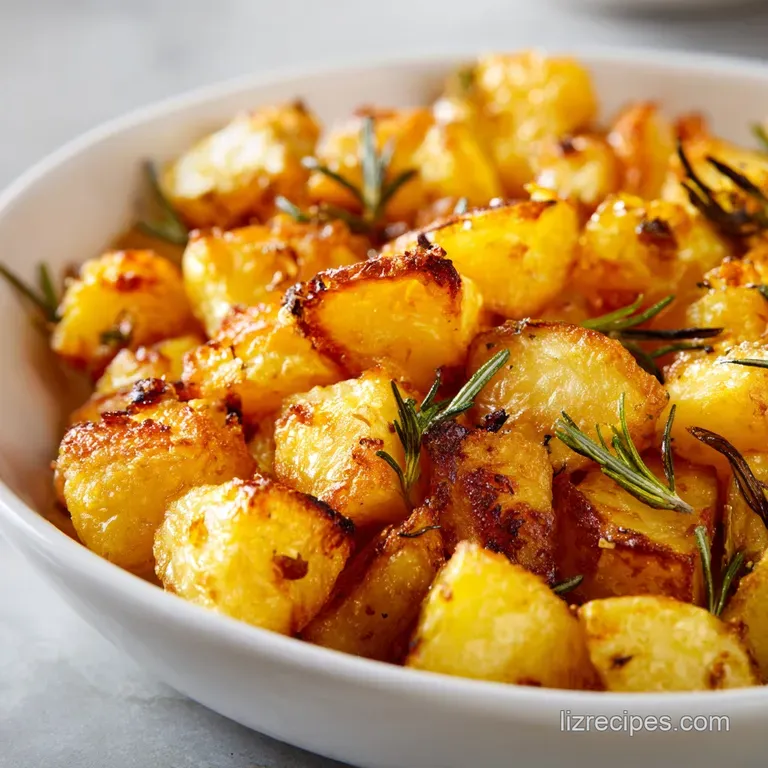
- Roast for another 20–30 minutes until a deep mahogany color and hard crust forms.
Phase 3: The Final Crisp & Season
- Remove from oven and immediately toss with garlic powder, dried rosemary, and black pepper. Finish with flaky sea salt. Note: Seasoning at the end prevents the garlic from burning
Chef's Tip: For a deeper flavor, add a pinch of smoked paprika to the final toss. It gives the potatoes a "grilled" vibe without the outdoor mess.
Fixing Common Texture Issues
It's easy to get frustrated when the potatoes don't shatter, but it usually comes down to one of three things: overcrowding, temperature, or water.
Troubleshooting Common Issues
| Issue | Solution | |||||
|---|---|---|---|---|---|---|
| Why Your Potatoes Stay Soggy | This usually happens if you crowd the pan. When potatoes touch, they steam each other instead of roasting. This traps moisture between the chunks and ruins the crust. If you're doubling the recipe, us | |||||
| Why They Burn on the Bottom | If the bottom is black but the top is pale, your oven might have a hot spot or your pan is too thin. Using a heavy duty rimmed baking sheet helps distribute the heat more evenly. | |||||
| Why They Aren't Browning | This is almost always a temperature issue. If the oil wasn't shimmering when the potatoes hit the pan, you've lost the initial sear. Make sure that pan is hot. | Problem | Root Cause | Solution | --- |
Adjusting the Batch Size
When you're cooking for a crowd, you can't just multiply everything linearly. If you're doubling the recipe to 4 lbs of potatoes, keep the baking soda and salt at about 1.5x rather than 2x to avoid an overly alkaline taste.
For the oil, you'll need more to cover the larger surface area, but don't let the potatoes swim in it. If you're scaling down to 1 lb, reduce the roasting time by about 10 minutes, as smaller batches often cook faster due to better airflow in the oven.
If you're doing a massive batch, work in shifts. It's better to have two trays of shattering potatoes than one tray of steamed, mushy ones.
| Servings | Potato Amount | Pan Size | Cook Time |
|---|---|---|---|
| 3 People | 1 lb | Small Sheet | 50-60 mins |
| 6 People | 2 lbs | Large Sheet | 60-70 mins |
| 12 People | 4 lbs | 2 Large Sheets | 70-80 mins |
Busting Common Potato Myths
Searing meat seals in juices, and people think parboiling potatoes "seals" the starch. It doesn't. Parboiling actually breaks the surface down so that it can be fried. The "seal" is actually a dehydrated crust of starch and oil.
Another myth is that you must use goose fat for the best results. While goose fat is traditional, a high-quality vegetable oil works just as well for the crunch. The flavor comes from the rosemary and garlic, not the type of fat used.
Finally,, some say you should roast from raw. Trust me on this, roasting from raw takes twice as long and results in a potato that is often overcooked on the outside and raw in the middle. Parboiling is the only way to get that velvety interior.
Storage and Zero Waste
If you have leftovers, don't put them in the microwave. That's a one way ticket to Mush Town. Instead, pop them in an air fryer at 400°F (200°C) for 5 minutes or back in a hot oven for 10 minutes to bring back the shatter.
In the fridge, they'll stay good for about 3-4 days in an airtight container.
For zero waste, don't throw away the potato peels. Toss them in a bit of oil and salt, then roast them on a separate small tray at the same temperature for 10-15 minutes. They make an incredible, budget-friendly snack that tastes like fancy potato chips.
Vibrant Pairing Ideas
These potatoes are rich and salty, so they need something bright to cut through the fat. A simple arugula salad with a lemon vinaigrette is a great start. If you're looking for a hearty main, this side pairs perfectly with a Clean Eating Turkey Chili for a cozy winter meal.
For those who love a classic roast, serve them alongside a garlic rubbed roast chicken or a thick cut of seared steak. If you're feeling like a full potato feast, you can serve these as a contrast to a Classic Potato Salad, providing both a creamy and a crunchy element to the table.
Keep the plating simple. Pile the potatoes high in a warm bowl and hit them with a fresh sprinkle of parsley or chives for a pop of color. It transforms a budget-friendly side into something that feels complete and joyful.
Recipe FAQs
What's the secret to crispy roasted potatoes?
Adding baking soda to the boiling water. This breaks down the potato's surface starch, creating a starchy slurry that transforms into a thick, crunchy crust in the oven.
How to make the best crispy roast potatoes?
Boil russet chunks with baking soda and kosher salt, shake to roughen the edges, and roast at 425°F (218°C). This process maximizes the surface area for the oil to create a mahogany crust.
How to make your potatoes crispy in the oven?
Roast them in a single layer in preheated vegetable oil at 425°F (218°C). Flip the potatoes after 30 minutes and continue roasting for another 20-30 minutes until hard.
What is a common mistake that stops your roast potatoes from getting crispy?
Crowding the baking sheet. When potato chunks touch, they steam each other instead of roasting, which traps moisture and ruins the crust.
Is it true I should use butter instead of oil for a better crunch?
No, this is a common misconception. Vegetable oil is preferred for high-heat roasting as it handles the 425°F (218°C) temperature better without burning.
How to reheat leftover roast potatoes without them getting mushy?
Use an air fryer at 400°F (200°C) for 5 minutes. You can also place them back in a hot oven for 10 minutes to restore the shatter.
Is it true that skipping the shaking step won't affect the final texture?
No, this is a common misconception. Shaking the potatoes vigorously after draining creates the mashed-looking exterior essential for a maximum crunch.
Best Crispy Ovenroasted Potatoes: Roasted Russet Potatoes