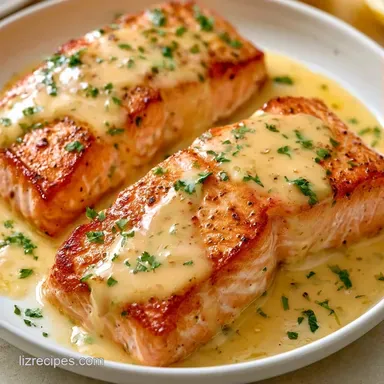
Baked Salmon with Creamy Lemon Butter Sauce

- Total25 Mins
- Servings4
- Calories549 kcal
- Time: 5 min active + 15 min baking + 3–5 min rest
- Flavor & Texture: Flaky, tender fish with a velvety lemon butter glaze
- Perfect for: Effortless weeknight dinners for busy families
Simple and Fast Baked Salmon
Ever pulled fish out of the oven only to find it's dry and rubbery? It's a total bummer when you're hoping for something tender, but overcooking happens in a flash with lean proteins.
The trick is using a high temperature to set the exterior quickly while keeping the center juicy. This baked salmon relies on a short, focused bake and a rich sauce to ensure every bite stays moist.
You can expect a meal that feels fancy but fits into a chaotic Tuesday. It's a reliable way to get a nutrient-dense dinner on the table without spending an hour in the kitchen.
How the Texture Stays Tender
- Skin Barrier: Baking skin-side down protects the delicate flesh from direct pan heat, which stops the bottom from overcooking.
- High Heat: A 400°F oven sets the fish quickly, keeping the natural oils inside rather than letting them leak out.
- Butter Emulsion: The fat in the butter and cream coats the fillets, adding a layer of moisture that mimics a slow-poach.
| Thickness | Temp | Rest | Cue |
|---|---|---|---|
| 1 inch | 400°F | 3 min | Opaque pink |
| 1.5 inch | 400°F | 5 min | Flakes easily |
Gathering Your Essentials
For the Fillets
- 4 skin-on salmon fillets (6 oz each)
- 2 tbsp olive oil
- 1 tsp salt, kosher
- 1/2 tsp ground black pepper
- 1 tsp garlic powder
For the Creamy Lemon Butter Sauce
- 4 tbsp unsalted butter
- 2 garlic cloves, minced
- 3 tbsp fresh lemon juice
- 2 tbsp heavy cream
- 1 tbsp fresh parsley, chopped
| Component | Purpose | Substitute Notes |
|---|---|---|
| Heavy Cream | Provides thickness | Coconut cream: Similar fat, adds coconut flavor |
| Unsalted Butter | Sauce foundation | Ghee: Works well, slightly nuttier taste |
| Lemon Juice | Balances the richness | Lime juice: A bit sharper, works for tropical variations |
Tools You'll Need
Minimal equipment is required here. Using a rimmed baking sheet lined with foil or parchment paper makes cleanup a breeze. You'll also need a small saucepan for the sauce and a meat thermometer to ensure the fish is perfectly cooked.
Essential Cooking Steps
Stage 1: Preparing the Fillets
- Set the oven to 400°F (200°C).
- Use paper towels to pat the 4 salmon fillets completely dry. Note: Drying the surface ensures the fish doesn't steam.
- Coat the flesh of the fillets with 2 tbsp olive oil, then season evenly with 1 tsp garlic powder, 1 tsp kosher salt, and 1/2 tsp black pepper.

- Arrange the fish skin-side down on a lined baking sheet, leaving space between the fillets. Note: This spacing helps hot air circulate for a more uniform cook.
Stage 2: The Oven Bake
- Roast for 12–15 minutes until the flesh transitions from translucent pink to an opaque, pale pink, the internal temperature reaches 145°F (63°C), and it flakes easily with a fork.

Stage 3: Finishing with Sauce
- As the salmon roasts, melt 4 tbsp unsalted butter in a saucepan over medium heat until it starts foaming.
- Stir in 2 cloves of minced garlic and cook for 1 minute until fragrant but not browned.
- Incorporate 2 tbsp heavy cream and 3 tbsp fresh lemon juice, simmering for 2 minutes until the sauce thickens slightly and looks glossy.

- Drizzle the sauce generously over the cooked salmon and garnish with 1 tbsp chopped fresh parsley.
If Something Goes Wrong
When the fish cooks too fast, you'll see a white, gummy substance on the surface. This is just albumin, a protein that pushes out of the muscle fibers. It's safe to eat, but it usually means the heat was too high or the fish stayed in too long.
If the fish sticks to the pan, you likely didn't use enough oil or the pan wasn't lined. Using parchment paper is the easiest fix for a stress-free cleanup.
The White Substance
Albumin appears when muscle fibers contract too quickly. To minimize it, check the temperature 2 minutes before the timer goes off.
Adjusting for Thickness
Thicker fillets need a few extra minutes. Always rely on the 145°F internal temp rather than the clock.
Sticking to the Pan
Lack of lubrication causes sticking. Always use parchment paper or a generous rub of oil.
| Problem | Root Cause | Solution |
|---|---|---|
| Rubbery Texture | Overcooked | Use a thermometer to pull fish at 145°F |
| White Gummy Film | Heat too high | Lower oven by 25°F or check earlier |
| Sauce Breaks | Boiled too hard | Simmer gently on medium-low heat |
Custom Flavor Ideas

Honey Lemon Glaze
If you like a bit of sweetness, stir 1 tbsp of honey into the lemon butter sauce. This creates a sticky coating that pairs well with steamed broccoli.
Garlic Herb Twist
Replace the parsley with a mix of fresh dill and chives. This gives the dish a more traditional, fresh profile.
BBQ Twist
For something different, you can brush the fillets with a Vegetarian BBQ Sauce during the last 5 minutes of baking. This adds a smoky depth to another baked salmon dinner.
Dairy free Option
Swap the butter for a plant-based butter alternative and use full-fat coconut milk instead of heavy cream. The result is slightly nuttier but just as rich.
Storage and Reheating
Store any leftovers in an airtight container in the fridge for 3 to 4 days, according to USDA guidelines for leftovers. Salmon doesn't freeze well once cooked, as the texture becomes mushy.
To reheat, avoid the microwave, which often makes the fish rubbery. Instead, place the fillets in a 275°F oven for about 10 minutes. If you're in a rush, warm them in a pan with a splash of water or extra butter. Ensure the fish reaches an internal temperature of 165°F (74°C) before eating for safety.
The Best Side Dishes
Because the sauce is so decadent, I love balancing it with something fresh and crisp. Roasted asparagus or a tangy arugula salad are both great options. To turn this into a heartier meal, serve it over wild rice or quinoa to absorb that delicious butter sauce.
Recipe FAQs
What temperature is baked salmon fully cooked at?
145°F (63°C). The flesh should be opaque, pale pink, and flake easily with a fork.
Is salmon better at 350 or 400?
400°F (200°C) is ideal. This temperature cooks the fillets quickly in 12–15 minutes, which helps preserve internal moisture.
Should the bake time be shorter for smaller fillets?
Yes, reduce the time. Check thinner cuts a few minutes early to ensure they do not overcook and become dry.
Can I use a different glaze instead of lemon cream?
Yes, a bold sauce works well. If you prefer a smokier flavor profile, you can use a tangy BBQ sauce instead.
Does broiling the top make the salmon overcook?
Yes, it can happen quickly. The intense heat of the broiler can move the fish from medium to well-done in a matter of moments.
How do I reheat leftover salmon without drying it out?
Warm fillets in a 275°F oven for 10 minutes. Alternatively, heat them in a pan with a splash of water or extra butter to maintain moisture. When reheating cooked leftovers, check with a food thermometer that the center reaches 165°F (74°C); the appliance temperature and time alone do not confirm this.
Baked Salmon with Lemon Butter
Ingredients:
Instructions:
Keep Cooking

Pellet Grill Salmon Filet
This Pellet Grill Salmon Filet is juicy and flaky. Learn how to cook salmon on a pellet grill using…

Honey Garlic Grilled Salmon
Honey Garlic Grilled Salmon with a sticky glaze. This Honey Garlic Salmon Recipe includes a…

Smoked Salmon for 8 Servings
This Smoked Salmon has a buttery center and firm exterior. Use these Traeger Smoked Salmon Recipes…

Vegetarian BBQ Sauce
A breakdown of what makes the flavor work is included to help you balance sweetness.

Tangy BBQ Sauce Recipe
Ketchup, brown sugar, and molasses blend into this Tangy BBQ Sauce Recipe.
